
THEATRICAL MAKE-UP
Make-up and hair are the final elements that create a well-rounded costume design. Below are some designs that were executed during classes or shows.
 Film |
|---|
 Large Stage |
 Large Stage |
 Small Stage |
 Small Stage |
Corrective
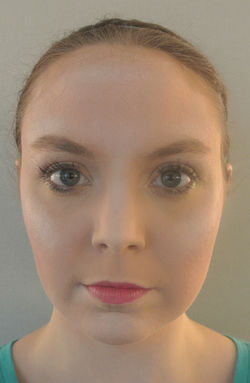
Regardless of the size of venue, a basic corrective make-up is necessary for most theatre and film. Basic corrective skills, highlighting unique facial features while correcting small flaws, help create ingenues and everyday characters.
The size of the venue can determine how much facial structure you can change. It also dictates the amount of blending, shading, etc.
 Old Age |
|---|
 Old Age |
 Middle Age |
 Middle Age |
Age
In educational theatre, in particular, there comes a need to alter the age of an actor. Based upon each person's facial shape and structure, we all age differently. Using primary research from family with similar facial structure at various ages, you can use makeup to age an actor a few years or several decades.
The size of venue will determine how drastically you can change an actor's age. Believable age makeup is well blended while punching the highlights on bags and wrinkles.
 Trauma |
|---|
 Trauma |
 Trauma |
Trauma
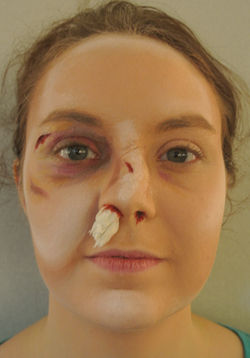
Trauma is a recurring theme in drama. Quick execution of realistic bruises and cuts is a skill that will be useful in quick changes that are executed in many shows. Based in strong research, realistic bruises have a variation of color that changes based on the age of the bruises.
Using nose putty, liquid latex, blood and makeup, and thorough research, you can create a trauma makeup that is unique to how the trauma occurred.
 Nose Putty & Eyebrow Blocking |
|---|
 Nose Putty & Eyebrow Blocking |
 Nose Putty & Eyebrow Blocking |
Nose Putty & Eyebrow Blocking
Using nose putty can quickly change the shape of an actor's nose without creating a prosthetic piece. Nose putty is also useful when creating a trauma makeup.
Eyebrow blocking can change the shape of eyebrows or their placement on the head. Specific characters may require the loss of eyebrows or the general look of their face.
 Hair |
|---|
 Hair |
 Hair |
Crepe Hair
Application of crepe hair on an actor can create a distinctive look. Whether it is eyebrows, a mustache or beard, a well-applied crepe hair can look very realistic for small stage.
Although more time consuming than a ventilated hairpiece, a hand applied crepe hair is more effective in hiding transitions and create a look like the hair is actually growing out of the skin.
 Macbeth Witch |
|---|
 Macbeth Design Sketch |
 Macbeth Witch |
 Macbeth Witch |
 Drag: Sea Queen |
 Drag: Sea Queen |
 Drag: Sea Queen |
 Lichtenstein Comic |
 Lichtenstein Comic |
 Lichtenstein Comic |
 Lichtenstein Comic |
Characters
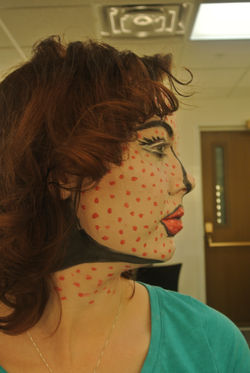
A combination of basic makeup techniques from highlight/shadow, putty, and hair can be used to create fully fleshed out characters for any size of stage.
From Witches in Macbeth, an under water drag queen, a Lichtenstein comic character, to Mother Nature, the possibilities in makeup are endless.
 Latex Slush Mold |
|---|
 Latex Slush Mold |
 Latex Slush Mold |
 Latex Slush Mold |
Latex Slush Mold
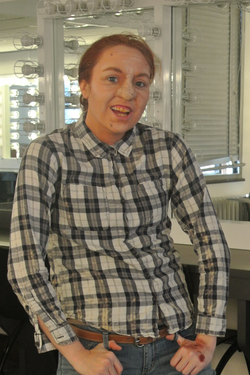
Creating prosthetic pieces to enhance character and/or change the shape of the actor's facial features can assist with telling the story of the play. For short show runs or prosthetics on a time crunch, slush molds are a good method of changing facial structure.
Creating a latex slush mold is a quick way to create a small prosthetic piece like a nose. Sculpted off from a head cast, I created a negative mold of the clay sculpt and used liquid latex to create a thin prosthetic of a hillbilly nose.
 Neoclassical Back |
|---|
 Neoclassical Research |
 Unstyled Synthetic Wig |
 Neoclassical in rollers |
 Neoclassical Front |
 Neoclassical |
Wig Styling
Depending on the budget of the show, a cheaper wig can be used to create a more elegant piece under a tight budget.
Thoroughly brushing out the wig, setting them in rollers with the final style in mind, steam setting the rollers, and finally releasing the rollers and styling it into the desired look.
 Ventilated Mustache |
|---|
Ventilated Hair Peices
For productions where multiple characters need to be played by one actor with desired facial hair, or when an actor cannot grow desired facial hair.
Tied hair on tulle or soft mesh creates a realistic effect of hair growing from the skin. Can then be spirit gummed to the face and reused as many times as needed.